Exam season does something strange to students. People who have been reasonably calm all semester suddenly become convinced that pulling three all-nighters in a row is a solid strategy. It rarely is. Cramming might get you through one exam on four hours of sleep, but it does not build the kind of retention that helps you on anything cumulative, and it definitely does not help when you are sitting in the exam room and your brain decides to freeze.
The good news is that exam preparation is genuinely learnable. There are specific, research-backed approaches that consistently outperform last-minute studying. And most of them require less total time, not more.

Start Earlier Than You Think You Need To
The most consistent advice across every study skills resource, and the one most consistently ignored, is to start early. Not just a few days early. Two to three weeks for major exams, ideally.
This is not about logging more hours. It is about giving your brain time to actually consolidate information between sessions. When you spread review across multiple days, each session reinforces what the previous one started. When you cram everything into one night, there is no consolidation window. You learn it for one morning, and then it fades.
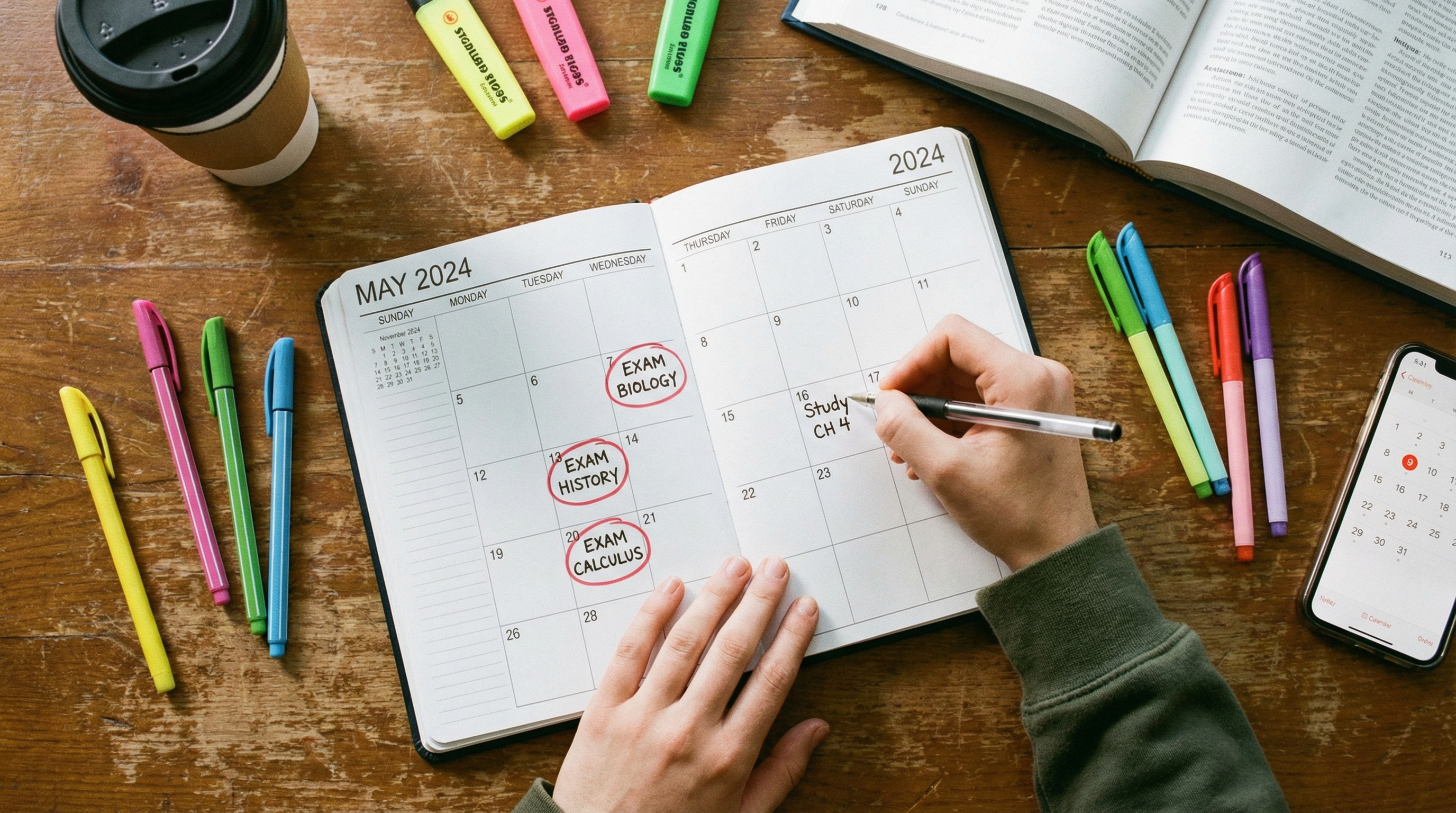
A practical starting point: look at the syllabus for each course on the first day of the semester and mark exam dates on a main calendar. Count backwards from each exam date and identify when you need to start preparing. Doing this once at the start of term removes the shock of suddenly realizing an exam is in four days.
Know What Kind of Exam You Are Preparing For
A multiple-choice exam and an essay exam require genuinely different preparation. For multiple-choice, you need strong recognition and discrimination between similar concepts. For essay exams, you need the ability to construct arguments, synthesize ideas, and write clearly under time pressure.
Ask your professor what the format will be if it is not already clear. Practice in the form you will be tested in. If it is multiple choice, use practice quizzes. If it is essay-based, write practice responses without looking at your notes. If it is problem-solving, work through practice problems under timed conditions. Studying the right content matters, but studying in the right format matters nearly as much.
Use the Pareto Principle to Prioritize
In most courses, a disproportionate amount of the exam content comes from a relatively small portion of the material. High-weightage topics, concepts the professor returned to repeatedly, sections that had the most practice questions, these are where your time pays off fastest.
Before you start reviewing, go through the course material and identify which topics are most likely to appear and carry the most marks. Focus the first half of your preparation time there. This is not about cutting corners. It is about being strategic with limited time instead of treating every page of your notes as equally important.
Active Revision Over Passive Review
Rereading notes is the most common study habit and one of the least effective. It creates familiarity without building recall. You recognize the information when you see it, but that is not the same as being able to retrieve it under exam conditions.
Active revision means doing something with the material. Close your notes and write down everything you remember about a topic. Answer past exam questions without looking at your answers first. Explain a concept out loud as if teaching someone. Use flashcards where one side is a question, not a definition. Create a mind map of a topic from memory and then check against your notes.
These methods feel harder than rereading, and they are. That difficulty is the point. The cognitive effort of retrieval is what strengthens the memory.
Practice Tests Are the Closest Thing to a Cheat Code
If your course has past exams available, use them. Set a timer, find a quiet room, and work through them under conditions as close to the real exam as possible. This does two things. First, it reveals exactly which areas you have not properly understood yet. Second, it reduces exam anxiety because you have already done something similar before the real thing.
After finishing a practice test, review every question you got wrong and figure out why. Wrong answers from misreading the question are different from wrong answers from not knowing the material. Both matter, but they need different responses.
Build a Revision Schedule, Not Just a Study Block
Most students block out time to study for an exam without specifying what they will cover in each session. That approach leads to a lot of time spent deciding where to start, which is a form of procrastination that feels productive.
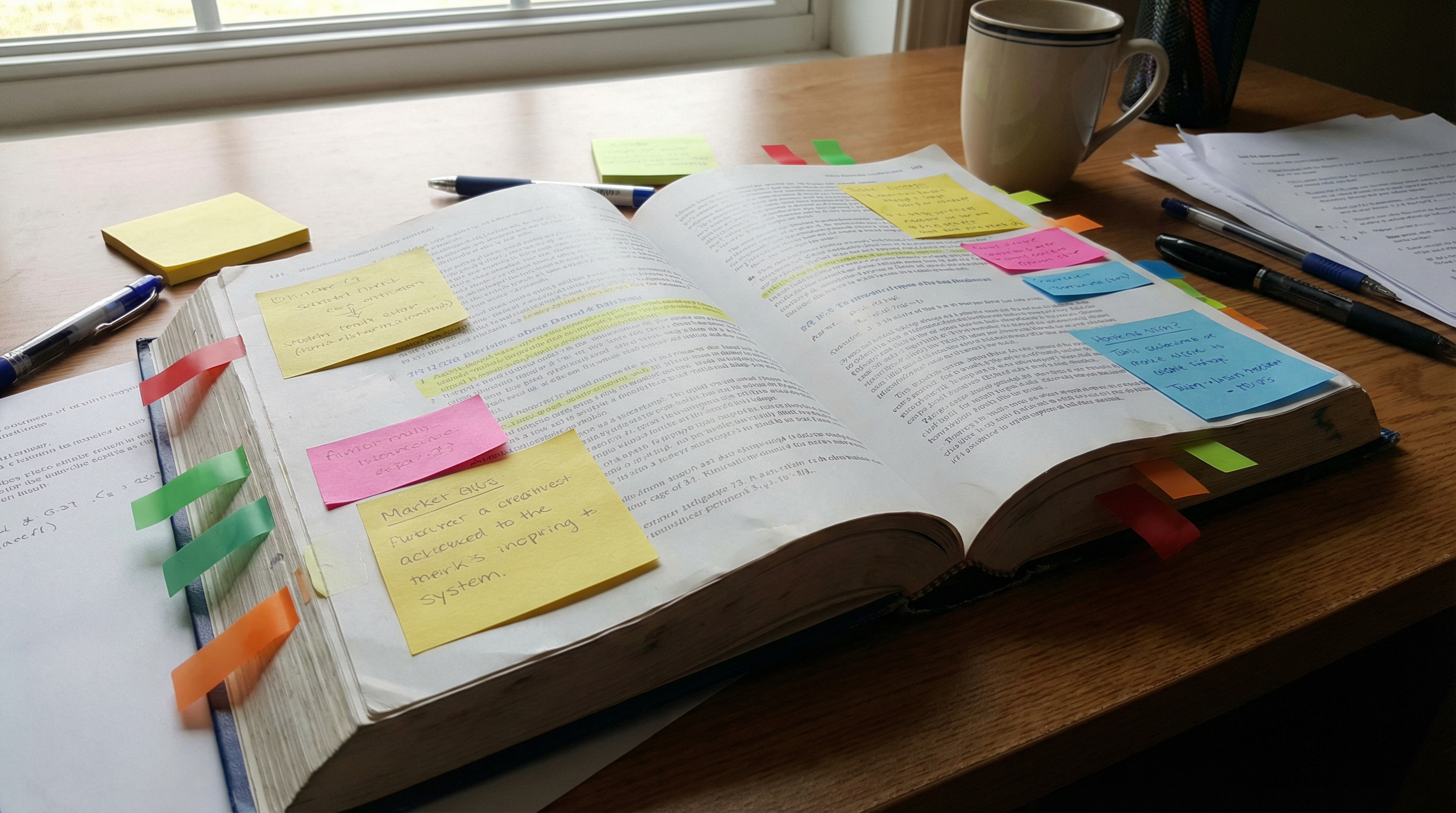
A better approach is to plan specific topics for specific sessions before the week starts. Monday: chapters 4 and 5, practice problems. Tuesday: review chapters 1 through 3 from memory. Wednesday: past exam questions on all units. Thursday: identify and fill gaps from the week. Friday: light review only.
This kind of plan means every session starts with a clear task instead of a blank decision. It also ensures you cycle through material multiple times rather than spending three days on the same two chapters you feel comfortable with.
Study Groups: When They Help and When They Do Not
Study groups work when everyone comes prepared and the group spends time testing each other, explaining concepts, and working through problems together. They stop working when they turn into social sessions where notes are compared and no one is actually retrieving anything from memory.
The teaching component is valuable. Explaining a concept to someone else forces you to understand it clearly, not just recognize it. If you can teach it accurately, you know it. If your explanation falls apart, you have found a gap.
Evaluate your study group honestly. If you are learning more in those sessions than you would alone, keep them. If you are mostly chatting and going home with the same understanding you arrived with, solo study is more efficient.
The Night Before and the Morning Of
The night before an exam is not for learning new material. If you do not know it by the evening before, trying to cram it in at 1am will not help and will cost you sleep that you need.
Use the night before for light, calm review. Skim your summary notes. Glance through key formulas or definitions. Do a short active recall session on the topics you feel least confident about. Then stop, eat well, and sleep at a reasonable hour.
On exam morning, eat something with protein and complex carbs. Your brain needs stable blood sugar for sustained cognitive work. Avoid loading up on coffee to compensate for missed sleep. The jittery alertness from too much caffeine is not the same as rested focus, and it tends to spike anxiety.
Managing Exam Anxiety
Some anxiety before an exam is normal and even useful. It sharpens attention. The kind that is worth addressing is the anxiety that floods your mind during the exam itself, where you blank on things you actually know.
A few minutes of slow breathing before the exam starts can shift your nervous system toward a calmer state. Apps like Calm or Headspace have short guided sessions designed for exactly this purpose. Physical exercise in the days leading up to exams also has a measurable effect on anxiety and cognitive function.
During the exam, if you blank on a question, move on. Come back to it. The act of working through other questions often loosens the mental block on the hard one. Do not spend ten minutes on one question while the rest of the paper sits unanswered.

After the Exam
When you get results back, review what you got wrong with the same attention you gave to preparation. Wrong answers are information. They tell you whether your gaps were in content knowledge, reading comprehension, time management during the exam, or something else. That diagnosis is what makes you better at the next one.
Students who improve consistently across a semester are usually the ones who treat each exam as feedback, not just a grade. The grade tells you where you landed. The errors tell you what to fix.
Written by Aryx K. | Aryx Elevate